

When most people think about building a website, they think about what it looks like — the colors, the layout, the content. The question of how it's built technically feels like something to leave to the developers. But the choice between a static and a dynamic website is not a purely technical decision. It has direct implications for your website's speed, security, cost, scalability, and how easily your team can manage it day to day.
Getting this decision right at the start saves significant time and money. Getting it wrong means either rebuilding sooner than expected or living with a website that doesn't serve your business as well as it should.
Here's a clear breakdown of what static and dynamic actually mean, where each approach works best, and how to figure out which one fits your business goals.
What a Static Website Actually Is
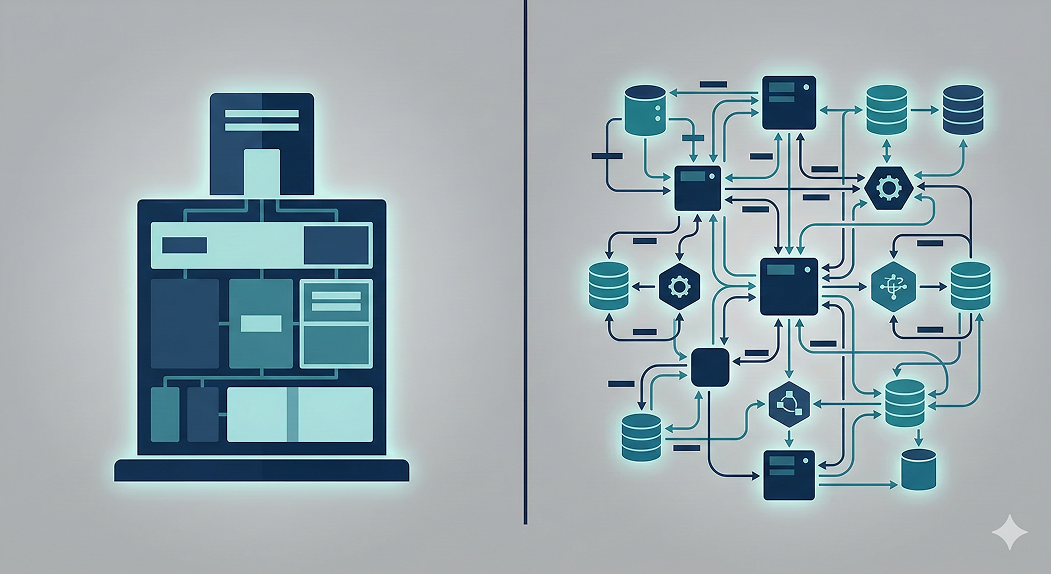
The term "static" doesn't mean simple or outdated — it's a description of how the website delivers content to the browser. A static website consists of pre-built files — HTML, CSS, and JavaScript — that are served directly to the user exactly as they exist on the server. Every visitor to a static page receives the same pre-rendered content.
Modern static websites, built with tools like Next.js, Gatsby, Astro, or Hugo, can be visually sophisticated, highly interactive, and genuinely impressive in terms of design and functionality. What makes them static is that the content is generated at build time rather than assembled on the fly when each user requests a page.
This architecture has several significant advantages. Static sites are fast — there's no database query or server-side processing happening when someone visits a page, so the browser receives content almost immediately. They're secure — with no database and no server-side application running, the attack surface is dramatically smaller than a dynamic website. They're cheap to host — static files can be served from a CDN for a fraction of the cost of running a traditional web server. And they scale effortlessly — a CDN can handle enormous traffic spikes without any special infrastructure.
What a Dynamic Website Actually Is
A dynamic website assembles its content in real time, at the moment each user requests a page. When someone visits a dynamic website, the server receives the request, queries a database, processes the relevant content through application logic, and returns a customised HTML response to the browser.
WordPress — which powers a significant portion of websites globally — is a dynamic system. So are Shopify, Magento, Laravel applications, and most custom web applications. The content is stored in a database and rendered on demand, which means it can be different for different users, respond to user input, and change without rebuilding the entire site.
Dynamic websites are more complex to build, more expensive to host, require more ongoing maintenance, and carry a larger security footprint than static sites. They're also essential for a wide range of use cases that static sites simply cannot handle.
Where Static Websites Excel
Static websites are the right choice for a clearly defined set of scenarios, and within those scenarios they are genuinely the superior option — not a compromise.
Marketing and branding websites. If your website's primary purpose is to communicate who you are, what you do, and why someone should work with you — and the content doesn't change based on who's visiting — a static website is almost always the better choice. It will load faster, rank better on Core Web Vitals, be easier and cheaper to host, and require less ongoing maintenance than an equivalent dynamic site.
Portfolio and agency websites. Showcasing work, presenting services, and capturing leads are all functions that a static website handles excellently. The content updates infrequently enough that rebuilding and redeploying when changes are needed is not a significant burden.
Documentation and content sites. Technical documentation, knowledge bases, and content-heavy informational sites benefit enormously from the speed and reliability of static architecture. Sites like these often receive high traffic and benefit from the CDN scalability that static hosting provides.
Landing pages and campaign microsites. For specific marketing campaigns, product launches, or event pages with a defined lifespan, static sites are fast to build, fast to load, and straightforward to manage.
Where Dynamic Websites Are Necessary
There are use cases where a static website is simply not sufficient, and attempting to use one creates more problems than it solves.
E-commerce. Any website where users can browse a product catalog, add items to a cart, and complete a purchase requires dynamic functionality. Inventory management, personalised recommendations, order history, real-time pricing — all of these require server-side logic and database interaction that static architecture cannot provide.
User accounts and personalisation. If your website needs to recognise individual users, store their preferences, show them content relevant to their history or profile, or allow them to manage their own data — you need a dynamic system. Static sites serve the same content to everyone.
Frequently updated content at scale. A news publication, a job board, a real estate listings site, or any platform where content is updated many times a day by multiple contributors benefits from a CMS-backed dynamic system. While static sites can pull content from headless CMS platforms, there's a practical limit to how frequently a static site can be rebuilt and redeployed.
Complex business logic. Booking systems, calculators, configuration tools, multi-step forms with conditional logic, real-time data feeds — anything that requires significant server-side processing or database interaction needs a dynamic architecture.
Community and social features. Forums, comments, user-generated content, ratings and reviews, messaging — these are inherently dynamic. They depend on storing and retrieving user-contributed data in real time.
The Middle Ground: Hybrid and Headless Architectures
It's worth noting that the line between static and dynamic has blurred considerably in recent years. Modern web architecture has produced approaches that combine the performance benefits of static delivery with the flexibility of dynamic content management.
Headless CMS with static generation is an approach where content is managed in a traditional CMS — allowing non-technical team members to update content easily — but the website itself is built as a static site that pulls from that CMS at build time. The result is a fast, secure static website whose content can be updated without a developer touching the code. Platforms like Contentful, Sanity, and Strapi power this approach.
Incremental Static Regeneration (ISR), available in frameworks like Next.js, allows individual pages to be regenerated on demand or on a schedule without rebuilding the entire site. This makes static architecture viable for larger content sites where a full rebuild would take too long.
Edge functions and serverless computing allow dynamic functionality — personalisation, A/B testing, authentication — to be handled at the CDN level rather than on a central server, combining the speed of static delivery with selective dynamic capabilities.
For many UAE businesses, a hybrid approach — static where possible, dynamic where necessary — delivers the best balance of performance, flexibility, and cost.
The Cost Difference Is Real and Worth Understanding
Hosting a static website on a modern CDN platform costs a fraction of running a dynamic website on a traditional server. For a small to medium business website, static hosting can cost as little as a few dollars a month — or nothing at all on generous free tiers from platforms like Netlify or Vercel.
A dynamic website requires a server with enough resources to handle concurrent requests, a database, regular backups, security patching, and ongoing maintenance. For a WordPress website on decent managed hosting, you might be looking at AED 100–500 per month depending on traffic and the quality of the hosting provider. For a custom dynamic application with higher traffic, significantly more.
Over three to five years, this difference compounds. It's not a reason to choose static when you genuinely need dynamic — but it is a reason not to default to dynamic when static would serve you equally well.
Security Is Not a Minor Consideration
Dynamic websites — particularly WordPress installations — are frequent targets for automated attacks. SQL injection, brute force login attempts, plugin vulnerabilities, and malware injection are all real and ongoing threats for dynamic websites that aren't actively maintained and secured.
This doesn't mean dynamic websites are inherently insecure — a well-maintained, properly configured dynamic site can be very secure. But it requires active effort: keeping the CMS and plugins updated, using strong authentication, monitoring for suspicious activity, and having a response plan when something goes wrong.
Static websites have an almost entirely different security profile. With no database to inject, no login page to brute force, and no server-side application to exploit, the attack surface is minimal. For businesses that don't have dedicated technical resources to manage ongoing security maintenance, this is a meaningful practical advantage.
Making the Decision for Your Business
The honest framework for making this decision is straightforward. Ask yourself these questions:
- Do users need to log in and see personalised content? → Dynamic
- Are you selling products online with a cart and checkout? → Dynamic
- Do you need real-time data, bookings, or user-generated content? → Dynamic
- Is your content updated multiple times daily by non-technical staff? → Dynamic or headless
- Is your website primarily informational, with content that changes occasionally? → Static
- Is performance and SEO a top priority with relatively stable content? → Static
- Do you want the lowest possible hosting and maintenance overhead? → Static
Most UAE business websites — agency sites, professional services firms, consultancies, restaurants, healthcare practices, real estate agencies presenting their brand — fall clearly into the static category. The businesses defaulting to WordPress for these use cases are often carrying more complexity, cost, and security risk than their actual requirements justify.
The right architecture is the one that matches what your website genuinely needs to do — not the one that's most familiar, most commonly used, or most impressive to explain in a meeting.
Build for your actual requirements. Everything else is overhead.


Not sure which approach is right for your business?
At Joyboy, we help businesses across the UAE make smart web decisions from the ground up — choosing the right architecture for your goals before writing a single line of code. Talk to us about your website project.