
Walk into any major retail store in Dubai Mall or Mall of the Emirates and you'll notice something — the way products are displayed is deliberate, considered, and designed to make you want to pick things up and examine them. The lighting, the angles, the ability to hold something and turn it over in your hands. Physical retail has always understood that seeing a product properly is what converts browsers into buyers.
E-commerce has spent the last two decades trying to replicate that experience on a screen. Product photography got better. Videos got added. Zoom functions improved. But there has always been a gap between what you see online and what arrives at your door — and that gap is directly responsible for a significant portion of returns, hesitant buyers, and abandoned carts.
3D product visualization is closing that gap. And across the Middle East, where e-commerce is growing faster than almost anywhere else in the world, it's quickly moving from a differentiator to an expectation.
What 3D Product Visualization Actually Means
The term covers a range of technologies and applications, so it's worth being specific about what we're talking about.
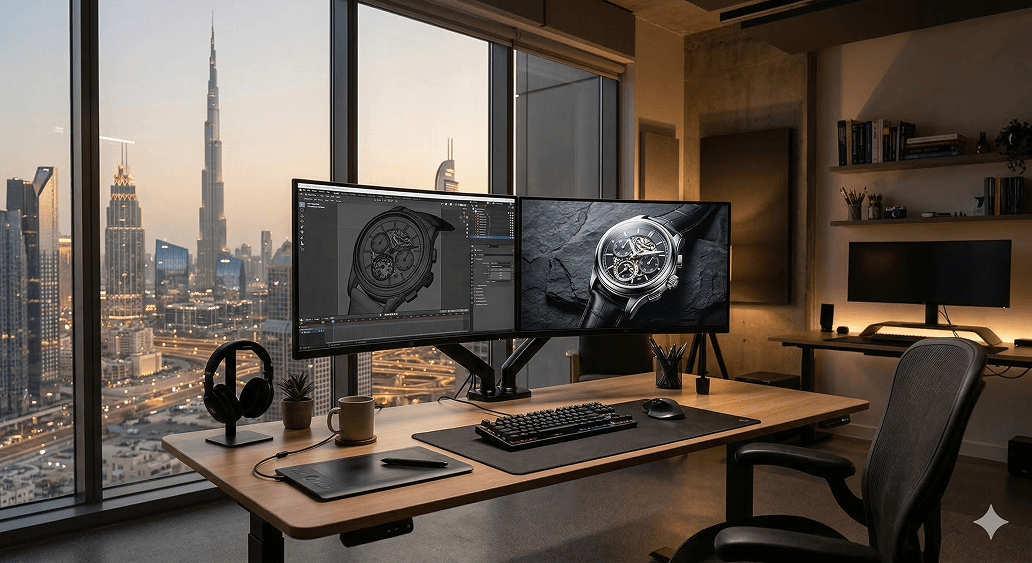
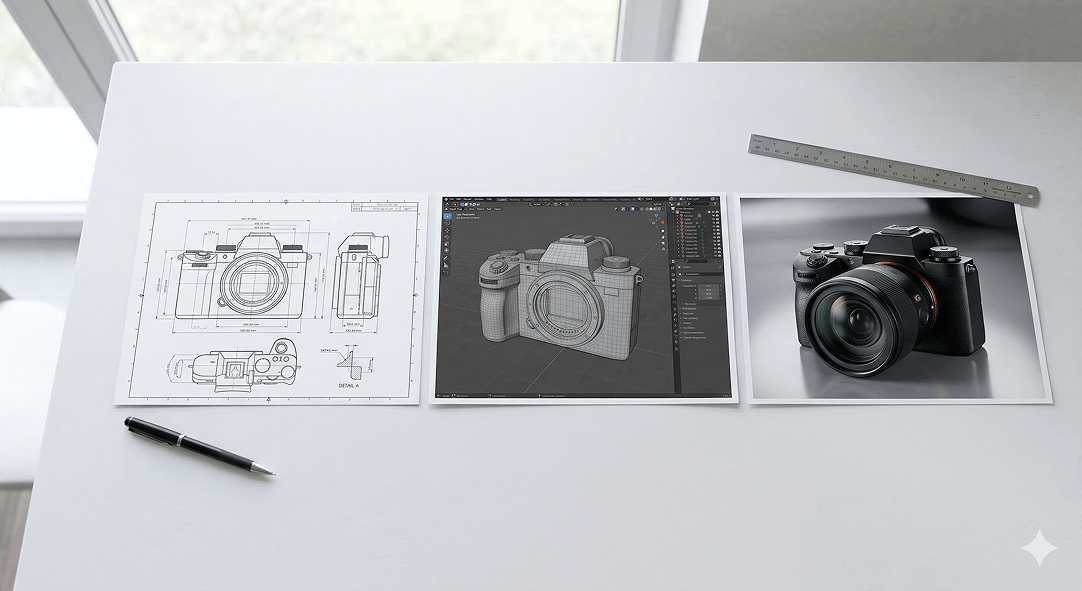
At its most fundamental, 3D product visualization means creating a digital three-dimensional model of a product that can be rendered, rotated, lit, and presented in ways that traditional photography cannot match. That model can then be used in several ways — as static renders that replace or supplement photography, as animated sequences that show the product from every angle or demonstrate how it works, or as interactive experiences where users can rotate and examine the product themselves directly in their browser or app.
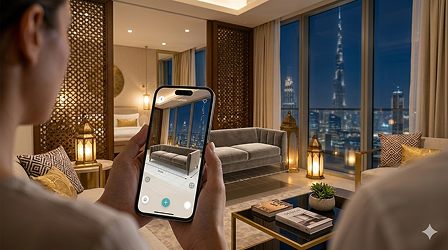
The more advanced end of the spectrum includes augmented reality — where a customer can point their phone camera at their living room and see what a sofa looks like in their actual space before buying it. This is no longer experimental technology. It's live and working on major e-commerce platforms right now, and adoption in the UAE and Saudi Arabia is accelerating.
Why the Middle East E-Commerce Market Is Particularly Receptive
The Middle East e-commerce market has several characteristics that make 3D visualization particularly valuable here compared to other regions.
High smartphone penetration and tech-savvy consumers. The UAE consistently ranks among the highest globally for smartphone usage and internet penetration. Consumers here are comfortable with technology, expect digital experiences to be polished, and are quick to adopt new interaction models when they add genuine value.
A retail culture built around premium experiences. The Middle East — and the UAE in particular — has a retail culture shaped by world-class physical shopping environments. Consumer expectations for presentation quality are high. A product listing that looks like it was photographed on a kitchen table competes poorly against a brand that presents its products with the same care and quality as its physical store.
High average order values in key categories. Furniture, electronics, fashion, jewellery, and luxury goods are all significant e-commerce categories in the region — and they're exactly the categories where purchase hesitation is highest and returns are most costly. These are products where seeing a photorealistic render from every angle, or placing a virtual version in your home before buying, has a direct and measurable impact on conversion.
Rapid e-commerce growth with increasing competition. The Middle East e-commerce market is projected to continue growing significantly through the late 2020s. As more brands move online and competition increases, the quality of the product presentation becomes a genuine differentiator. Brands that invest in how their products look and feel online will increasingly outperform those that don't.
The Business Case: What 3D Visualization Actually Does for Sales
The adoption of 3D visualization isn't driven by aesthetics alone. The business metrics behind it are compelling.
Reduced return rates. Returns are one of the most significant cost centers in e-commerce, particularly for furniture, fashion, and electronics. The primary driver of returns is product expectation mismatch — what arrived wasn't what the customer thought they were buying. 3D visualization, particularly when it accurately represents dimensions, materials, and colors, dramatically reduces this gap. Several major global retailers have reported return rate reductions of 25–40% after implementing 3D and AR product experiences.
Higher conversion rates. Giving customers more confidence in what they're buying reduces purchase hesitation. Interactive 3D experiences consistently outperform static photography in conversion rate tests, particularly for high-value items where the customer needs more reassurance before committing.
Lower photography costs over time. This one surprises people. A 3D model, once created, can be relit, repositioned, placed in different environments, and adapted for different marketing contexts indefinitely — without a new photoshoot. For brands with large or frequently updated product catalogs, the economics of 3D modeling versus ongoing photography often favor 3D within the first year or two.
Stronger social and advertising performance. High-quality 3D renders and animations perform exceptionally well in digital advertising and social media content. The visual quality, the ability to show a product in motion or from angles impossible with photography, and the distinctiveness of well-executed 3D content all contribute to stronger engagement and click-through rates.
What It Looks Like in Practice for Different Product Categories
Furniture and home décor. This is arguably where 3D visualization and AR deliver the most obvious value. Furniture is expensive, difficult to return, and highly dependent on how it looks in the customer's specific space. AR placement tools — where a customer can see a virtual sofa in their actual living room through their phone camera — have become a genuine purchase driver for forward-thinking furniture brands in the UAE.
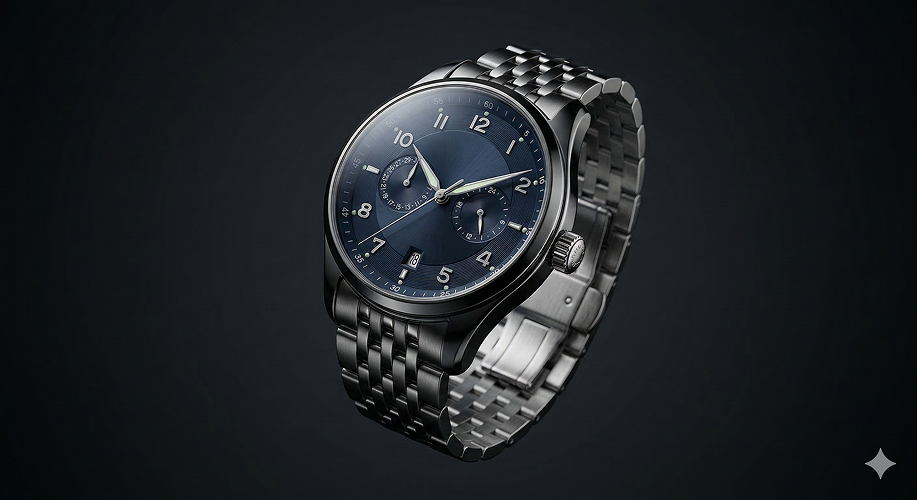
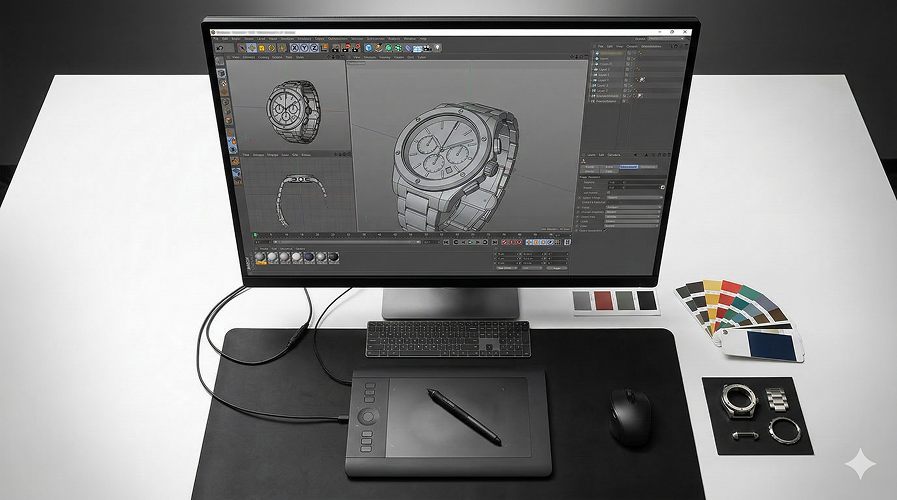
Jewellery and watches. High-end jewellery and watch brands in the region have been early adopters of 3D visualization because it solves a fundamental e-commerce challenge — these are products where the details matter enormously and traditional photography often fails to capture the true quality of materials, finishes, and craftsmanship. A photorealistic 3D render of a watch can show the texture of the dial, the finish of the case, and the movement of the hands in ways a photograph rarely can.
Electronics and tech products. 3D models allow electronics brands to show products from every angle, highlight specific ports and features, and create exploded view animations that demonstrate internal components or assembly. For a market that takes technology seriously, this kind of product presentation builds confidence and communicates quality.
Fashion and footwear. Virtual try-on technology for footwear — where a user can see a pair of shoes on their own feet using their phone camera — is already live with several major brands globally and is gaining traction in the Middle East market. For fashion more broadly, 3D garment visualization is an active area of development that's moving quickly.
The Barrier Is Lower Than Most Businesses Think
A common misconception about 3D product visualization is that it's exclusively for large enterprise brands with big budgets. That was true five years ago. It's much less true today.
The tools, workflows, and expertise available in 2026 mean that high-quality 3D product models and renders are accessible to mid-sized e-commerce businesses at price points that make commercial sense — particularly when the return rate reduction and conversion improvements are factored into the calculation.
The key is working with a team that understands both the technical side of 3D production and the commercial context of e-commerce — one that can produce assets optimised for web performance, platform compatibility, and actual sales outcomes rather than just impressive visuals.
Where This Is Headed
The trajectory is clear. As AR hardware improves, as web-based 3D performance gets faster, and as consumer familiarity with interactive product experiences grows, the gap between brands investing in 3D visualization and those relying solely on traditional photography will widen.
The Middle East market — with its tech-forward consumers, premium retail culture, and rapidly growing e-commerce sector — is one of the most fertile environments in the world for this technology to take hold. The businesses building these capabilities now are not just keeping up. They're setting the standard that their competitors will eventually have to meet.
Ready to show your products in a way that actually converts?
At Joyboy, we create high-quality 3D product visuals and interactive experiences for e-commerce brands across the UAE and Middle East. See what we can do for your products.