
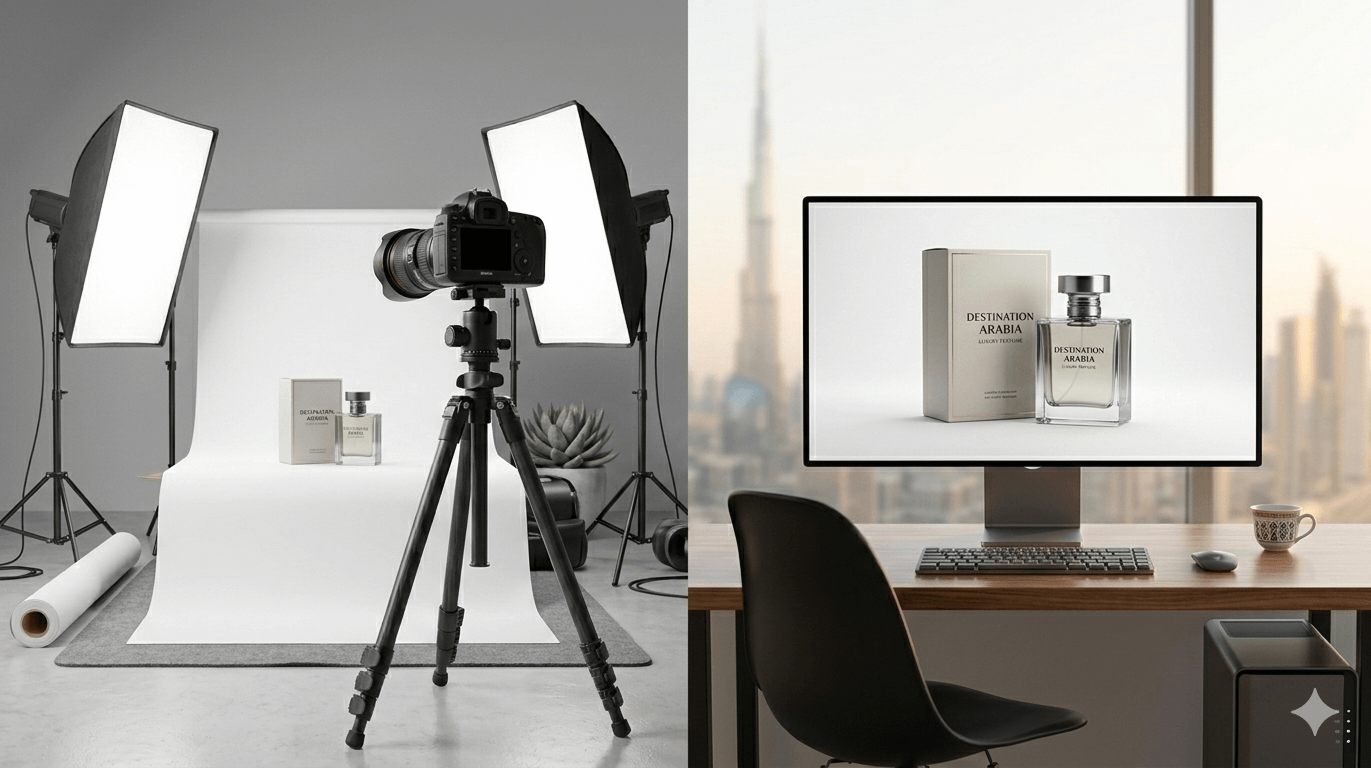
Product photography has been the unquestioned default for as long as brands have been selling things online. You make the product, you hire a photographer, you book a studio, you shoot it from every angle, you retouch the images, and you publish them. The process is familiar, the results are predictable, and for a long time it was the only viable option.
That's changing. Not slowly and quietly in the background — visibly, rapidly, and with real commercial logic behind it. A growing number of UAE brands across furniture, consumer electronics, fashion accessories, beauty, and luxury goods are replacing traditional product photography with 3D renders — partially for some product lines, entirely for others. And the brands leading this shift are not doing it for novelty. They're doing it because the economics and the output quality have crossed a threshold that makes it the smarter choice.
Here's what's driving that shift, what 3D renders can and can't do compared to traditional photography, and how to think about whether it makes sense for your brand.
The Economics of Traditional Product Photography at Scale
To understand why 3D is compelling, it helps to be honest about the real cost of product photography — not for a single hero shot, but across a product catalog of any meaningful size.
A professional product photography shoot in Dubai involves studio rental, a photographer and assistant, a stylist if props and scene-setting are involved, post-production retouching, and the logistical overhead of getting every product variant to the studio and back. For a single product in a single colorway, this is manageable. For a product line with twenty SKUs across five color options, it becomes a significant operational and financial undertaking.
And then the product changes. A new colorway gets added. The packaging gets updated. A component gets redesigned. The existing photography is now wrong — and the entire process starts again for the affected products.
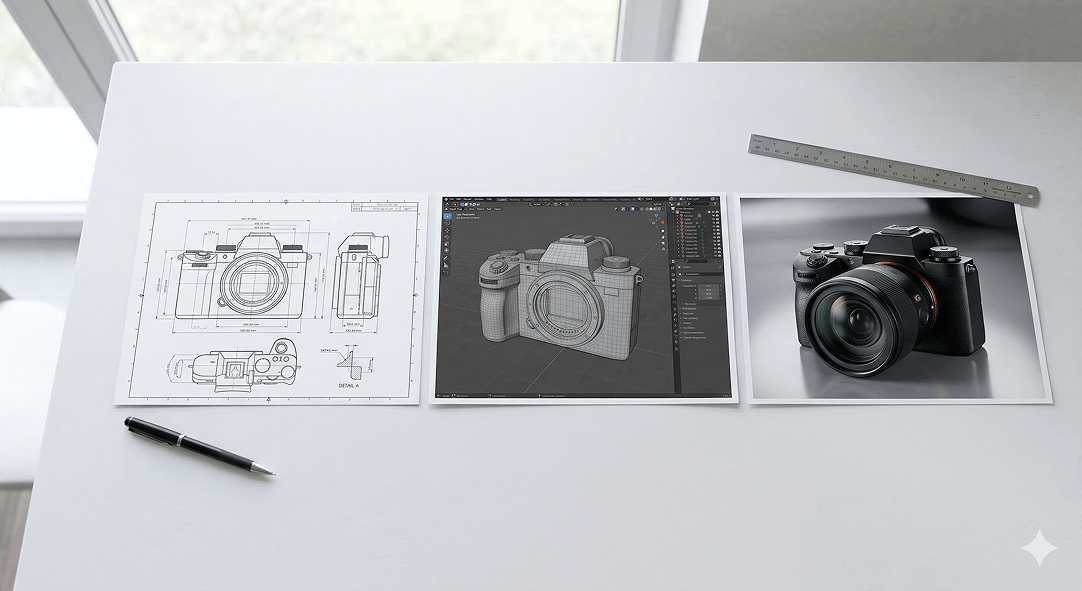
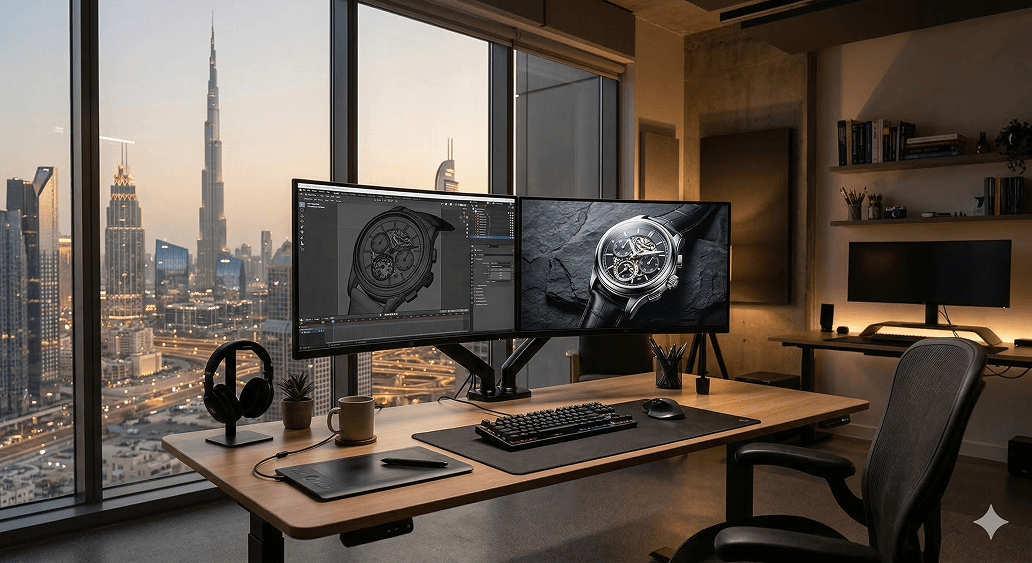
3D modeling changes this calculation fundamentally. A 3D model of a product, once built to the required level of detail, can be relit, repositioned, recolored, placed in different environments, and adapted for entirely different marketing contexts without a new photoshoot. Adding a colorway to a 3D model is a fraction of the cost and time of re-shooting the product in the new color. Updating a component means modifying the model — not booking a new studio date.
For brands with large catalogs, frequent product updates, or multiple regional markets requiring different visual contexts, the economics of 3D versus photography tip decisively in favor of 3D within the first product cycle.
The Quality Argument Has Been Settled
For years, the legitimate objection to 3D renders for product visualization was quality. Early CGI product images looked like CGI — the lighting was off, the materials didn't respond correctly, the shadows felt wrong. Anyone who knew what they were looking at could tell the difference between a photograph and a render.
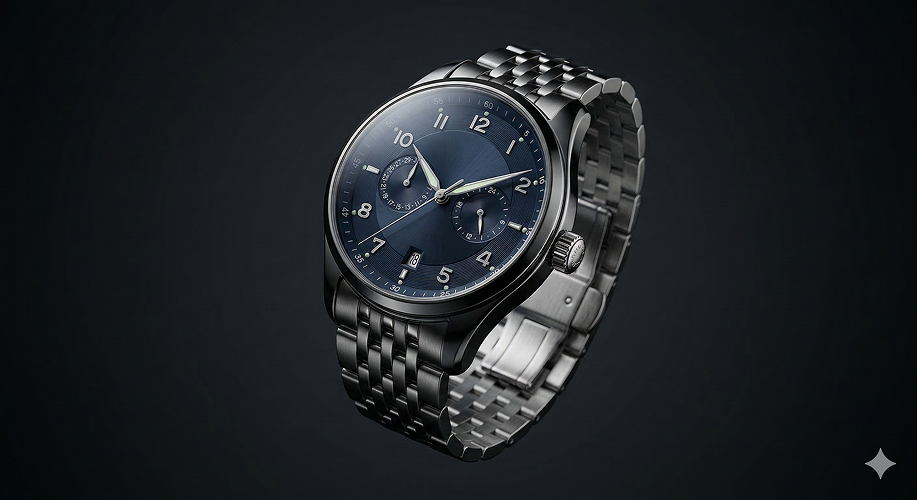
That objection no longer applies at the level of quality that professional 3D studios produce in 2026. Modern rendering engines — combined with physically based rendering techniques that simulate how light actually interacts with different materials — produce images that are routinely indistinguishable from photography, even under close examination.
The materials library available to 3D artists now includes accurate simulations of brushed metal, anodized aluminum, leather textures, fabric weaves, matte and gloss plastics, glass, ceramics, and virtually any other material a product might be made from. The lighting can be matched to any real-world environment — a studio setup, a lifestyle scene, a specific time of day in a specific location. The result is a render that doesn't look like a render.
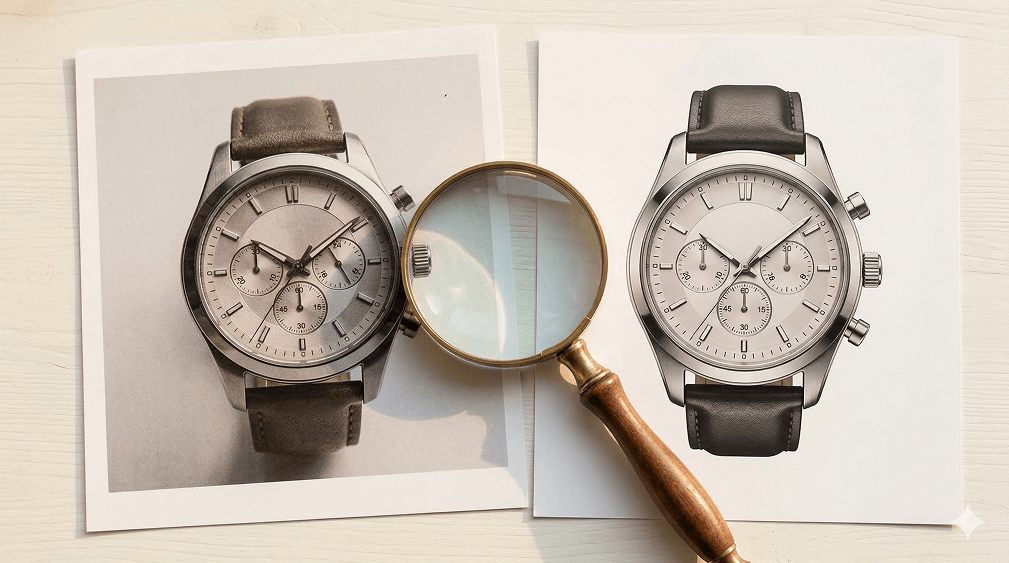
Several major global brands have run consumer research testing whether people can distinguish between their 3D renders and their photography. The results consistently show that most consumers cannot — and when renders are higher quality than the photography they're compared against, consumers rate the render as more realistic.
What 3D Renders Do Better Than Photography
Beyond matching photography on quality, 3D renders have specific capabilities that photography simply cannot replicate.
Perfect consistency across a product line. In a photoshoot, subtle variations in lighting, camera angle, and post-production between sessions mean that images of different products in the same line often don't quite match. With 3D, every product in a line can be rendered in identical conditions — same lighting setup, same camera angle, same background treatment — producing a catalog that looks perfectly cohesive regardless of how many products it contains or when each was added.
Impossible configurations and environments. Photography can only show what physically exists in the location of the shoot. 3D renders can place a product anywhere — a rooftop in Dubai, a living room in Paris, a minimalist white void, a natural landscape — without a location shoot, travel costs, or weather dependency. Products can be shown in configurations that don't exist yet, allowing pre-launch marketing before manufacturing is complete.
Exploded views and technical visualization. Showing the internal components of a product, the assembly sequence, the way parts fit together — these are standard 3D capabilities that are either impossible or prohibitively expensive with traditional photography.
Animation and motion content. A 3D model that's been built for still renders can also be animated — showing the product rotating, demonstrating a mechanism, or transitioning between configurations. Creating equivalent motion content with photography requires a separate video shoot.
Variant generation at scale. Once a base 3D model exists, generating renders for every color, material, or configuration variant is a matter of applying different material presets and rendering. For a product with ten color options, this means ten renders from the same model at a fraction of the cost of re-shooting each variant.
What Photography Still Does Better
An honest assessment includes acknowledging where traditional photography retains an advantage — because 3D is not the right answer for every situation.
Texture and tactile quality at the extreme high end. For certain luxury products where the texture, weight, and tactile quality of materials is central to the brand experience — hand-stitched leather goods, handmade ceramics, high-thread-count textiles — an exceptional photograph by a skilled photographer can still convey qualities that even excellent 3D rendering struggles to fully replicate. The gap is narrowing, but it exists.
Lifestyle and human context. Photography that involves real people — models wearing clothing, people interacting with products in genuine lifestyle contexts — requires photography. 3D human characters have improved enormously but remain unconvincing in many contexts. Brands that rely heavily on aspirational lifestyle imagery with real people will continue to need photography for that dimension of their content.
Speed for simple, one-off requirements. For a business that needs a single product shot quickly and doesn't have an existing 3D asset to work from, a photography session can be faster than the time required to build a 3D model from scratch. The 3D advantage on speed and cost applies primarily to ongoing catalog work and product lines where the model investment pays back across multiple uses.
How UAE Brands Are Making the Transition
The most common approach for UAE brands making the transition to 3D is not an immediate wholesale replacement of photography but a deliberate migration over a product cycle or two.
New product lines get launched with 3D assets from the start — the modeling investment is made as part of the product development process, so renders are available before the product is even in production. Existing product lines with high variant counts get their models built progressively, starting with the highest-volume or most frequently updated products where the economic case is strongest. Photography remains in use for lifestyle and human-context content where it's genuinely superior.
Over two to three product cycles, most brands that follow this approach find themselves operating primarily on 3D assets — with photography reserved for specific applications where it adds something that renders can't.
The Practical Considerations for Getting Started
If you're considering moving your brand toward 3D product visualization, a few practical considerations are worth thinking through before you start.
Asset quality determines everything. The quality of 3D renders is directly dependent on the quality of the models and the skill of the artists producing them. Low-quality 3D is more damaging than decent photography — it signals cheapness and inattention in a way that an imperfect photograph rarely does. Work with studios that can show you photorealistic work at the level you need, not just technically competent renders.
Provide detailed reference material. The accuracy of a 3D model depends on the quality of the reference materials provided — technical drawings, physical samples, high-resolution photographs from multiple angles, material specifications. The more detailed your references, the more accurate and usable the resulting models will be.
Think about downstream use from the start. A 3D model built for e-commerce still renders can also be used for animated content, AR applications, and interactive web experiences — but only if it's built to the appropriate technical specifications from the beginning. Thinking about all the ways you might want to use the asset before modeling begins saves significant rework later.
**Plan the file management.**3D asset libraries require proper file management and version control. As your model library grows, having a clear system for storing, versioning, and accessing assets becomes increasingly important. This is an operational consideration that's easy to overlook at the start and increasingly painful to retrofit later.
The Direction of Travel Is Clear
The shift from photography to 3D for product visualization is not a trend that's going to reverse. The quality gap has closed, the economic case has strengthened, and the additional capabilities that 3D enables — animation, AR, variant generation, impossible environments — have no equivalent in traditional photography.
For UAE brands operating in competitive e-commerce and retail markets, the question is not whether to make this transition but when and how. The brands building their 3D asset libraries now are establishing an operational advantage — in catalog flexibility, content production speed, and visual consistency — that will compound as their libraries grow and their competitors catch up.
The studio booking, the logistics, the weather delays, the re-shoots — these are operational frictions that a well-built 3D pipeline eliminates entirely. In a market that moves as fast as the UAE, that's not a minor convenience. It's a meaningful competitive edge.
Thinking about making the switch to 3D for your products?
At Joyboy, we create photorealistic 3D product renders and animations for UAE brands — faster, more flexible, and more cost-effective than traditional photography at scale. See what we can create for your products.