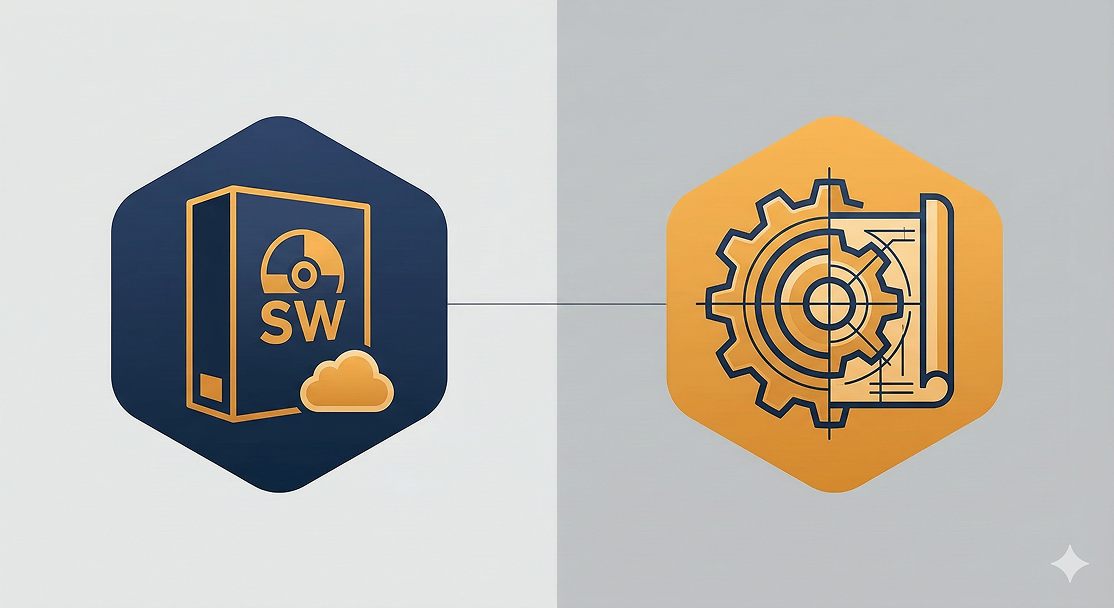
Every growing business hits this crossroads eventually. Your current tools are showing their limits — things that used to work fine are now slowing your team down, creating workarounds, or simply not connecting the way your operation needs them to. So you start exploring options and quickly find yourself weighing two very different paths: buy something ready-made, or build something specifically for you.
Both have real merit. Both have real limitations. And the wrong choice at the wrong stage of your business can cost you significantly — in money, in time, and in momentum. Here's an honest breakdown of how to think through it.
What Off-the-Shelf Software Actually Gives You
Ready-made software — think platforms like Salesforce, HubSpot, Zoho, Monday.com, or any of the hundreds of SaaS tools available today — exists because a large number of businesses share similar enough needs that a single product can serve them all reasonably well.
The advantages are genuine. You can be up and running in days rather than months. The software has been tested by thousands of users, so most of the obvious bugs have been worked out. Updates, security patches, and new features are handled by the vendor. Support documentation is usually extensive. And the upfront cost is typically far lower than building something from scratch.
For businesses in early stages, or for functions that are genuinely standard — email marketing, basic CRM, accounting, project management — off-the-shelf tools are often entirely the right answer. There's no point building something that already exists and works.
Where Off-the-Shelf Software Starts to Break Down
The problem with software built for everyone is that it's optimised for no one in particular. As your business grows and your processes become more specific, you start running into the edges of what the platform was designed to handle.
You find yourself paying for five modules when you only use two. You're working around limitations that the vendor has no plans to fix because they don't affect enough of their customer base to prioritise. You're manually moving data between tools that don't integrate cleanly. Your team has developed a collection of spreadsheets and workarounds that have quietly become load-bearing parts of your operation.
This is the moment where the cost calculation starts to shift. Because the real cost of off-the-shelf software isn't just the subscription fee — it's the accumulated time your team spends working around its limitations every single day.
What Custom Software Actually Gives You
Custom software is built specifically for how your business operates. Every workflow, every user role, every report, every integration is designed around your actual requirements — not a generalised version of them.
The advantages compound over time. Your team works faster because the tools match the way they think. Onboarding new staff is easier because the system reflects your actual processes. You own the software outright, so there are no per-seat fees that scale painfully as you hire. And when your needs evolve, the software can evolve with you without waiting for a vendor roadmap.
Custom solutions also tend to integrate far more cleanly with your existing systems — your ERP, your e-commerce platform, your logistics provider, your internal databases — because they're built with those specific connections in mind from the start.
The Real Cost Comparison
This is where a lot of businesses make a mistake — they compare the upfront cost of custom development against the monthly subscription fee of a SaaS tool and conclude that off-the-shelf is obviously cheaper. But that comparison ignores several things.
Total cost of ownership over three to five years. SaaS fees compound. A tool that costs AED 1,500 per month is AED 90,000 over five years — before price increases, before additional seat costs as you grow, before the cost of add-ons you'll eventually need.
The cost of lost productivity. If your team of ten people each spends thirty minutes a day working around software limitations, that's five hours of lost productivity every day. Over a year, that's a significant number that rarely appears on anyone's software budget.
The cost of switching. If you outgrow an off-the-shelf tool after two years and need to migrate to something else — whether that's another SaaS platform or a custom solution — you'll pay migration costs, retraining costs, and carry the operational disruption of the transition.
Custom development has a higher upfront cost. But for businesses with specific, complex, or rapidly scaling needs, the long-term economics often favour it considerably.
Signs That Custom Is the Right Call
Not every business needs custom software, and nobody should build custom for the sake of it. But there are clear signals that off-the-shelf is no longer the right fit:
- Your team maintains multiple spreadsheets to compensate for gaps in your current tools
- You're paying for several different platforms that don't talk to each other properly
- Your processes are genuinely unique to your industry or business model and no existing tool handles them well
- You're hitting user limits, storage limits, or feature walls on your current platform regularly
- You've requested features from your current vendor multiple times and they remain unbuilt
- Your data lives in too many places and consolidating it manually is becoming a serious time cost
If more than two or three of these apply to your business right now, a conversation about custom development is worth having.
Signs That Off-the-Shelf Is Still the Right Call
Equally, custom is not always the answer. There are situations where a ready-made solution is clearly the smarter move:
- You're early stage and your processes are still evolving — building custom too early locks in decisions you haven't fully worked through yet
- The function you need software for is genuinely standard and well-served by existing tools
- You need something running within weeks, not months
- Your budget is limited and the productivity gains from custom don't yet justify the investment
There's no shame in using great off-the-shelf tools. The goal is to use the right tool for your actual situation — not to build custom because it sounds more sophisticated.
The Hybrid Approach
It's worth noting that the choice isn't always binary. Many businesses run a combination of off-the-shelf tools for standard functions alongside custom-built components for the parts of their operation that are genuinely unique.
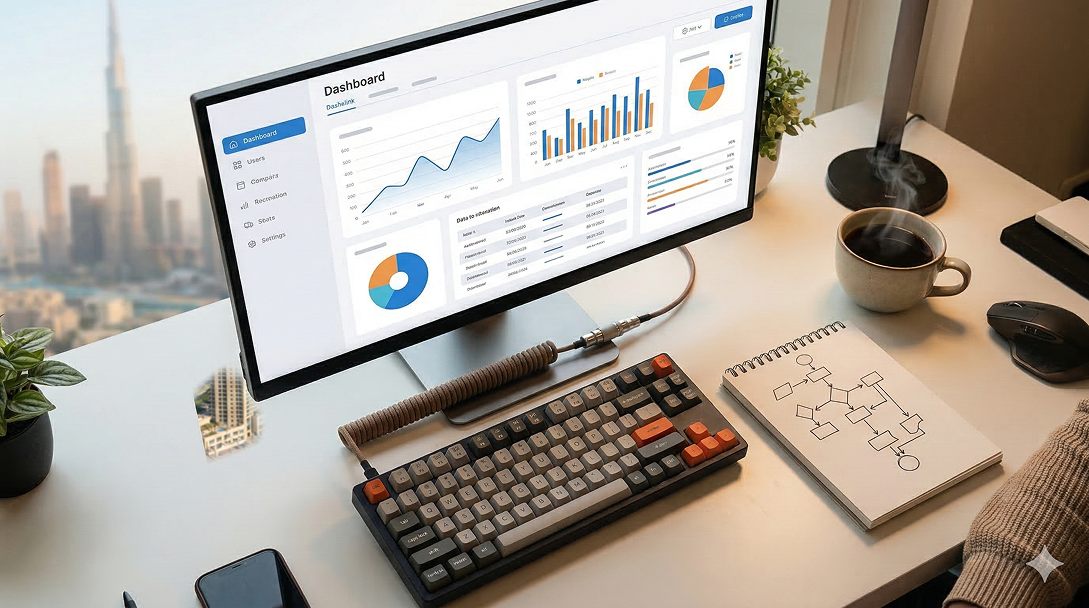
A business might use a standard accounting platform, a well-known CRM, and a custom-built operations dashboard that ties everything together and handles the specific workflows that no single product handles well. This hybrid approach often gives the best of both worlds — proven tools where they work, custom solutions where they're needed.
Making the Decision
The right question isn't "which is cheaper?" It's "which approach serves my business better over the next three to five years?" Answer that honestly, factor in the full cost picture, and the decision usually becomes much clearer.
If you're genuinely unsure, the most useful thing you can do is map out your current processes in detail — where the friction is, what's being done manually that shouldn't be, what your team complains about most. That exercise alone will tell you a great deal about whether your needs are standard enough for off-the-shelf or specific enough to warrant building something of your own.

Not sure which direction is right for your business?
At Joyboy, we help businesses across the UAE make this decision with clarity — and build exactly what they need when custom is the right call. Let's talk about your requirements.