
Building a new website comes with a list of things you need that you didn't fully account for when you started. Copy. Icons. Illustrations. Case study screenshots. And team photos.
Team photos are one of those things that sounds simple and turns out to be anything but. Getting every team member in the same place, same light, same framing, on a day that works for everyone, with a photographer who understands the aesthetic you're going for — it's a coordination challenge that takes weeks to schedule and a budget that adds up fast the moment you want something that looks genuinely premium rather than corporate clip art.
We had a different problem on top of that. Our team is distributed — some members are in Dubai, others are working remotely. A single coordinated shoot wasn't practical. So we did what any team building a digital product in 2026 would do: we found a better way.
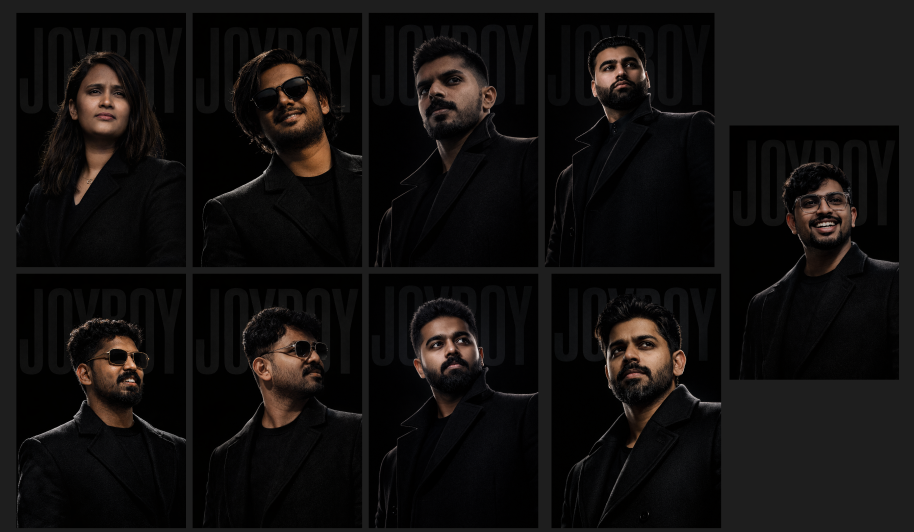
We generated our team portraits using AI. And the results are genuinely some of the best-looking team imagery we've produced.
Here's exactly how we did it.
Where the Prompt Came From
The starting point wasn't something we wrote from scratch. We found a strong base prompt on Threads — Instagram's text platform — from someone who had been experimenting with portrait generation. The prompt had the right bones: dramatic studio lighting, high-contrast black background, editorial portrait style.
But it needed work. We took it into Grok — xAI's model — to refine the structure, sharpen the language, and make the constraints more explicit. Grok is particularly good at prompt engineering and helped us tighten the identity anchor section, which is the most critical part of any portrait prompt. The identity anchor tells the model exactly what to preserve from the reference photo — facial features, skin tone, hairstyle, structure — so the output looks like the actual person rather than a generically handsome stranger in a nice coat.
After refining the prompt in Grok, we tested outputs in both ChatGPT (GPT-4o image generation) and Google Gemini. Both produced strong results. ChatGPT's outputs had a slightly more cinematic quality — the rim lighting was crisper, the fabric texture on the overcoat read more convincingly, and the JOYBOY typography integration in the background felt more resolved. We ended up using ChatGPT for the final portraits.
The Prompt We Used
This is the complete prompt, exactly as we used it:
You are a world-class editorial portrait photographer specializing in dramatic, high-contrast studio lighting. Create a powerful, dynamic heroic portrait.
IDENTITY ANCHOR (CRITICAL STRICT CONSTRAINT): Use the exact person from the attached reference photo. Preserve their precise facial features, skin tone, hairstyle, facial structure, and natural likeness perfectly unchanged. Apply the lighting and angle to this specific subject.
WARDROBE & STYLING: Attire: Premium black overcoat with a sharp, tailored fit. The overcoat should have a sophisticated matte black wool or cashmere-like texture with subtle fabric details and clean lines. Color: Deep matte black. Expression: Serious, intense, and focused. The subject is looking off-camera into the space above and slightly to the side, not directly at the lens.
SCENE & COMPOSITION: Background: Pure matte AMOLED black, completely solid and seamless, no gradients, no patterns, no texture — absolute deep black for maximum contrast. Large brand text integrated into the background: the word "JOYBOY" in an extremely large, bold, minimalist sans-serif font, positioned behind the subject. The text should be subtly visible through the darkness — rendered in a very dark charcoal gray or faint luminous white with low opacity so it feels elegant and integrated rather than overpowering. The typography must feel modern, premium, and architectural, with generous letter spacing. Camera Angle (CRITICAL): Strong low-angle shot (looking up at the subject) to make them appear powerful, dominant, and heroic. Framing: Medium close-up, tightly focused on the face and shoulders, with the large "JOYBOY" text framing the composition behind them.
LIGHTING (DRAMATIC & HIGH-CONTRAST): Palette: High-contrast lighting with deep blacks and bright highlights. Key Light: Strong, directional key light from the upper left or upper right, creating dramatic chiaroscuro shadows that sculpt and emphasize the facial structure, jawline, and cheekbones. Rim Light: Powerful, crisp rim/edge light that cleanly separates the subject's head and shoulders from the deep black background, giving a glowing outline. Fill: Minimal to none — keep the overall mood dark and intense. Mood: Mysterious, intense, confident, and premium. Cinematic studio aesthetic with strong three-dimensional form.
TECHNICAL QUALITY: Style: Hyper-photorealistic, ultra-detailed, 8K resolution. Focus: Razor-sharp on the eyes and face, natural skin pores and texture preserved. Overcoat: Visible sophisticated matte black fabric texture with subtle tailoring details and clean structured lines. Overall: Clean, modern, luxury editorial portrait with maximum contrast against the pure AMOLED black background and the large subtle "JOYBOY" text.
The prompt is long — deliberately so. Vague prompts produce vague results. Every section of this prompt is solving a specific problem: the identity anchor prevents the model from generating a generic face, the AMOLED black background instruction prevents gradient bleed, the low-angle camera direction creates the heroic framing that distinguishes these portraits from standard headshots, and the rim light specification produces the clean edge separation that makes the subject pop against the dark background.
What the Process Looked Like
For each team member, the process was:
Step 1 — Reference photo. Each person sent a clear reference photo — ideally well-lit, front-facing, and large enough for the model to read facial details accurately. Smartphone selfies in good natural light worked fine. Professional headshots worked better.
Step 2 — Upload and generate. We uploaded the reference photo to ChatGPT alongside the full prompt. GPT-4o's image generation accepts reference images and uses them as identity anchors when the prompt explicitly instructs it to.
Step 3 — Review and iterate. The first generation was usually close but not perfect. Common issues were slight drift from the reference likeness — the model would preserve the general ethnicity and hair but soften or alter specific facial features. We'd refine with a follow-up instruction like "the nose is different from the reference — preserve the exact nose shape from the reference photo" or "the eyes in the reference are slightly narrower — match this more precisely."
Step 4 — Select and finalise. After two to three iterations, each portrait was at the quality level we needed. We exported at maximum resolution and ran a final check comparing each portrait against the reference photo for likeness accuracy before publishing.
The whole process for one team member — from reference photo to final portrait — took approximately 20 to 30 minutes. A traditional studio shoot for the same result would have taken a half day of coordination, a booking, travel, and editing time after.
Why AI Team Photos Make Sense in 2026
This is worth addressing directly because there's still a hesitation in some circles about using AI-generated imagery for professional contexts. The argument is usually something about authenticity — that AI images are somehow less genuine than photographs.
That argument made more sense when AI portrait generation produced obvious artefacts — wrong numbers of fingers, melted ears, eyes pointing in different directions, skin textures that looked like they were rendered underwater. In 2025 and 2026, that's no longer the baseline. GPT-4o's image generation produces portraits with convincing skin texture, accurate clothing fabric detail, and — with a well-engineered prompt and a good reference photo — genuine likeness preservation.
The more useful question is not whether AI images are authentic but whether they serve the purpose. For a team page on a website, the purpose of a portrait is to give visitors a sense of the people behind the product — their presence, their professionalism, their character. A well-generated AI portrait does this. A mediocre photograph taken in bad light in someone's home office does it less well.
There are specific practical reasons AI portraits made sense for us and will make sense for many UAE businesses in 2026:
Distributed teams. When your team works across different locations — which is increasingly common post-2020 — coordinating a single-location shoot is genuinely difficult. AI removes the location constraint entirely.
Visual consistency. Traditional team shoots are hard to keep consistent when team members change. A new hire joining six months after the original shoot will have a portrait from a different session, different light, different framing. With an AI portrait system and a saved prompt, every new team member gets a portrait that looks like it was shot on the same day as everyone else.
Brand control. We wanted portraits that specifically featured our brand name in the background. No photographer is going to composite that into 10 portraits at a reasonable price. With AI, it's built into the prompt — every portrait has it, at the same scale, in the same position, with the same typographic treatment.
Speed. We launched the website on a deadline. Waiting for a shoot to be scheduled, executed, and edited was not compatible with that deadline. The AI portraits were done in the time it took each team member to send us a selfie and wait 30 minutes.
What Still Requires Human Judgment
AI portrait generation in 2026 is not fully autonomous. The quality ceiling is high but reaching it requires skilled prompting, careful iteration, and human judgment at every stage.
The identity anchor is the hardest part to get right consistently. Models are better at preserving general appearance than precise specific features — the exact shape of someone's nose, the specific way their eyes sit, the precise structure of their jawline. Getting this right requires comparison between reference and output, specific corrective instructions, and sometimes multiple generation passes. You can't just upload a photo and walk away.
Lighting consistency across a group portrait set requires maintaining the same prompt and iterating when a specific generation diverges from the established look. Small prompt variations produce noticeable lighting differences that break the visual cohesion of a team page.
And quality assurance matters. Not every generation is usable — some have subtle artefacts that are only visible at full resolution. A careful eye reviewing each output before publication is not optional.
What AI removes is the logistical and financial overhead. What it doesn't remove is the creative direction, the judgment, and the eye for quality. These are now the human contribution to a process that used to require a full production team.
The Tools, Compared
We used three tools at different stages of this project and they each have different strengths worth understanding.
Grok (xAI) was most useful for prompt engineering — refining language, tightening constraints, and structuring the prompt in a way that gave image generation models clear, unambiguous instructions. Grok's analytical strengths make it a good tool for the meta-task of building better prompts.
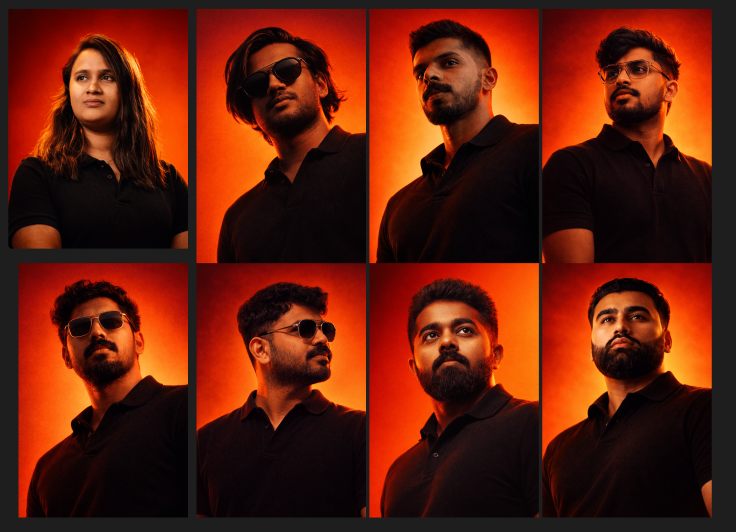
Google Gemini produced strong results — particularly on skin tone accuracy for South Asian and Middle Eastern reference photos, which matters for a Dubai-based team. The colour grading in Gemini's outputs tended to be slightly warmer than ChatGPT's, which can work better or worse depending on the aesthetic you're going for.
ChatGPT (GPT-4o) was our final choice for the published portraits. The rim lighting separation was crisper, the overcoat fabric texture was more convincing, and the overall cinematic quality felt most aligned with the premium aesthetic we were going for. The identity anchor consistency — how well it preserved specific facial features across iterations — was also stronger in our testing.
None of these tools is definitively better across all use cases. For this specific prompt and this specific aesthetic, ChatGPT produced the outputs that matched our vision most closely. That assessment may be different for a different prompt, a different style, or a different reference photo demographic.
What This Means for Businesses Building Websites in 2026
Team imagery is one piece of a broader shift that AI tools are enabling for businesses building or rebuilding their web presence in 2026. Photography, illustration, iconography, and brand imagery are all moving toward a model where AI handles the production volume and human creative direction handles the brief, the quality bar, and the final selection.
This is not a replacement for photography in all contexts. Product photography, event documentation, and editorial journalism still require cameras and photographers. But professional portrait photography for a team page — a controlled, studio-style shoot with a consistent aesthetic — is exactly the kind of work where AI generation has reached a quality level that makes it a serious alternative.
The result on our website is a team page that looks more visually consistent, more dramatically lit, and more distinctly branded than most professionally photographed team pages we've seen. It cost us a few hours of prompt work rather than a few thousand dirhams and a half-day shoot.
That tradeoff is increasingly hard to argue against.
Need AI-generated visuals, brand imagery, or a website that actually looks the part?
At Joyboy, we build and design digital products for UAE businesses — from websites to full brand identity systems. See what we can build for you.